

Organic Cotton and Sustainable Oversized T-Shirts in India
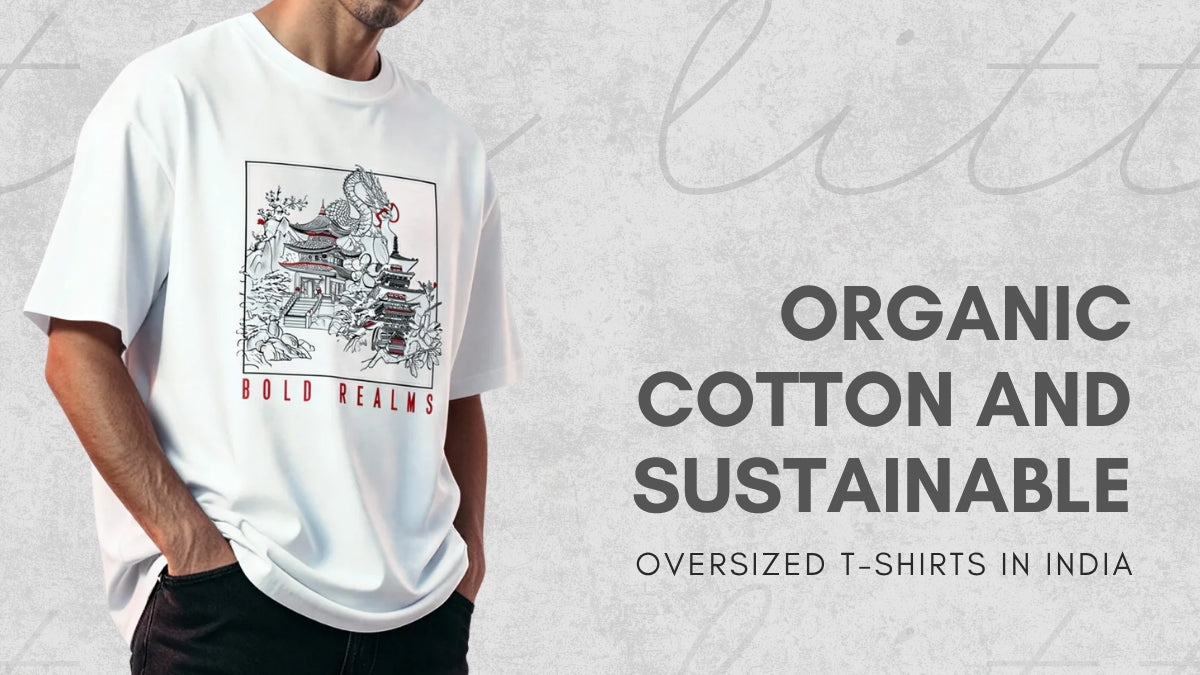
India is home to the largest cotton-growing area in the world. Yet most of the cotton going into our everyday clothes is still the conventional kind - heavily treated with pesticides, water-intensive, and processed with chemicals that you would not want sitting on your skin all day.
The good news: that is changing. A growing number of Indian streetwear brands are switching to certified, sustainably sourced cotton. This piece breaks down what those certifications actually mean, why fabric weight matters, and how to spot a t-shirt that is genuinely built to last.
What Is BCI Cotton and Why Does It Matter for a T-Shirt You Wear Every Day?
BCI stands for the Better Cotton Initiative — a global non-profit founded in 2005 that works to make cotton farming better for farmers, for the environment, and for the industry's long-term future. It is currently the world's largest cotton sustainability programme.
Here is the problem BCI is trying to solve. Conventional cotton farming is resource-intensive by design:
- Cotton accounts for just 2.4% of the world's cultivated land but uses 6% of the world's pesticides and 16% of its insecticides
- Cotton production accounts for about 14% of global insecticide use
- In India, over 5.8 million cotton farmers face exposure to pesticides every growing season
BCI works by training farmers to use water more efficiently, reduce chemical inputs, care for soil health, and maintain decent labour practices. The results in India have been meaningful.
According to BCI's 2023 India Impact Report, between the 2014/15 baseline and the 2021/22 season:
|
Metric |
Change |
|
Overall pesticide use |
Down 53% |
|
Use of Monocrotophos (WHO highly toxic pesticide) |
Dropped from 41% to 2% |
|
Water use for irrigation |
Down 29% |
As of 2024, BCI accounts for 23% of global cotton production, with partner brands including H&M, IKEA, and Levi Strauss.
What does this mean for the t-shirt you wear?
When a brand uses BCI-certified cotton, it means the cotton in your tee was grown under a framework that actively tracks and reduces environmental harm. It is not the same as organic cotton (more on that below), but it is a significant, verifiable step above conventional cotton farming.
What Does OEKO-TEX Standard 100 Mean for Your Skin?
Your skin is your body's largest organ, and it absorbs what it comes into contact with — especially when you are warm or sweating. Most people apply the same scrutiny to their skincare that they never apply to their clothing. OEKO-TEX Standard 100 closes that gap.
OEKO-TEX Standard 100 is an independent certification that tests every component of a textile — fabric, thread, dyes, buttons, zippers — for over 1,000 harmful substances. It was established in 1992 and is now one of the most widely recognised textile safety certifications in the world.
The substances it screens for include:
- Formaldehyde (used in wrinkle-resistant treatments)
- Heavy metals like lead and mercury (found in some dyes)
- Carcinogenic azo dyes
- Phthalates (common in prints and coatings)
- Pesticide residues
- PFAS (now banned across all OEKO-TEX standards)
The certification is structured around four product classes. The stricter the skin contact, the stricter the requirements:
|
Product Class |
What It Covers |
Strictness Level |
|
Class I |
Products for babies under 3 years |
Highest |
|
Class II |
Direct skin contact items (like t-shirts) |
High |
|
Class III |
No direct skin contact (outerwear) |
Moderate |
|
Class IV |
Home textiles, curtains |
Standard |
A t-shirt sits squarely in Class II, meaning it has to pass stringent limits on every substance listed in the criteria catalogue. The certification is valid for one year only — so brands cannot simply certify once and coast. Re-testing is required annually.
One important distinction: OEKO-TEX Standard 100 certifies that the finished product is safe. It is separate from how the cotton was grown. A fabric can hold this certification without being organic. Ideally, you want both a clean-growing standard like BCI and a finished-product safety standard like OEKO-TEX. Together, they cover you from field to fabric.
Why 240 GSM Cotton From Sustainably Grown Sources Lasts Longer Than Fast-Fashion Alternatives
GSM stands for grams per square metre. It is a measure of how dense the fabric is, and it has a direct relationship with how a t-shirt performs over time.
Here is how the spectrum breaks down in the Indian market:
|
GSM Range |
Typical Use |
What to Expect |
|
140–160 GSM |
Fast fashion, summer throwaways |
Thin, semi-transparent, loses shape quickly |
|
160–180 GSM |
Everyday retail basics |
Decent for casual wear, limited structure |
|
180–220 GSM |
Mid-range premium |
Balanced comfort and durability |
|
220–240+ GSM |
Premium streetwear |
Structured, durable, holds shape after washing |
A standard fast-fashion t-shirt typically runs between 140 and 180 GSM. These fabrics are cheap to produce, lightweight, and wear out in months. The seams stretch, the neckline loses its shape, and the print cracks.
At 240 GSM, the story is different. The dense, tightly woven fabric resists pilling, shrinking, and warping. The collar holds. The silhouette — especially on a drop-shoulder oversized cut — retains its structure instead of going limp.
Two specific factors make 240 GSM fabric from sustainably sourced cotton worth it:
1. Structural integrity for oversized cuts. A boxy, oversized silhouette requires fabric that can hold its shape away from the body rather than clinging or sagging. Anything below 200 GSM on an oversized cut tends to collapse after a few hours of wear.
2. Better print durability. Heavier fabrics provide a smoother, denser surface for printing. High-GSM cotton absorbs ink more evenly, resulting in less bleeding, better colour vibrancy, and less cracking over time.
That said, GSM alone does not guarantee quality. A 240 GSM shirt made from low-grade cotton can feel rough and pill quickly; a well-made ring-spun 160 GSM tee can outlast it. The combination of high GSM and sustainably sourced, quality cotton is what creates a t-shirt worth keeping for years.
There is also a cost-per-wear argument. A 180 GSM t-shirt at ₹399 that lasts six months costs you more per wear than a 240 GSM tee at ₹999 that lasts three years. Sustainable buying is also financially rational buying.
The Litt's Sourcing Story
The Litt is a premium Indian streetwear brand that makes oversized t-shirts from BCI-certified cotton with OEKO-TEX Standard 100 certification. Every tee is made to be durable, skin-safe, and sustainably sourced -- without the premium markup you see from international brands.
The brand's 240 GSM fabric is bio-washed and pre-shrunk, which means the t-shirt you receive has already been through the shrinkage process. What you get on day one is what you keep. The drop-shoulder silhouette is built for the oversized fit to sit correctly — structured at the shoulder, clean at the hem, and without the shapeless quality you get from fast-fashion oversized cuts.
The BCI certification means the cotton in every tee was grown under a programme that actively reduces pesticide use and water consumption. The OEKO-TEX Standard 100 certification means the finished garment has been tested for over 1,000 harmful substances. Together, these two credentials mean you are not choosing between style and skin safety.
Explore the full collection at thelitt.in.
Comparison Table: Conventional Cotton vs BCI Cotton vs Organic Cotton
|
Feature |
Conventional Cotton |
BCI Cotton |
Organic Cotton |
|
Pesticide use |
None — grown without synthetic pesticides or fertilisers |
||
|
Water consumption |
Very high |
Lower per hectare, but varies by region |
|
|
GMO use |
Common in India (~80% of Indian cotton is GMO) |
Permitted |
Not permitted |
|
Traceability |
Limited |
Mass balance system across supply chain |
Full chain segregation (via GOTS or OCS) |
|
Certification body |
None |
GOTS, OCS, or similar |
|
|
Global supply share |
Majority of global cotton |
||
|
Price impact |
Lowest cost |
Moderate |
Higher due to lower yields and strict process |
|
Farmer training |
None mandated |
Mandatory, ongoing |
Required for certification |
|
Skin safety of finished product |
Depends on processing |
Depends on processing |
Depends on processing — look for OEKO-TEX additionally |
The key takeaway: BCI and organic cotton are not the same thing. BCI improves how conventional cotton is grown at scale. Organic cotton removes all synthetic inputs entirely, but is significantly scarcer. Both are better than conventional cotton. For maximum assurance on the finished garment, look for OEKO-TEX Standard 100 alongside either of these.
What certifications should I look for on a sustainable t-shirt?
Here is a quick reference:
|
Certification |
What It Covers |
What to Look For |
|
BCI (Better Cotton Initiative) |
How cotton is grown |
Reduced pesticides, water, better farmer conditions |
|
OEKO-TEX Standard 100 |
What the finished garment contains |
Tested for 1,000+ harmful substances |
|
GOTS (Global Organic Textile Standard) |
Organic cotton from farm to finished product |
Full chain organic certification |
|
OCS (Organic Content Standard) |
Verifies organic content in the product |
Percentage of organic material confirmed |
For everyday streetwear in India, the most practical combination is BCI-certified cotton plus OEKO-TEX Standard 100 on the finished garment. This covers both the farming end and the processing end, without the supply constraints that come with fully organic sourcing.